
Origins of the Western Genre:
The Western genre draws its inspiration from the American frontier during the late 19th and early 20th centuries, a period marked by exploration, rugged individualism, and the expansion into the American West. Originally rooted in real-life ranching, cowboy culture, and settler life, the Western narrative evolved into a major storytelling genre in literature and, more notably, in film.
Western films, beginning in the silent era and gaining massive popularity by the 1930s and 1940s, created a stylized version of frontier life that emphasized themes of lawlessness, justice, personal freedom, and survival. These movies helped establish the iconic “cowboy” look that, while based on historical elements, was often exaggerated or modified for cinematic appeal.
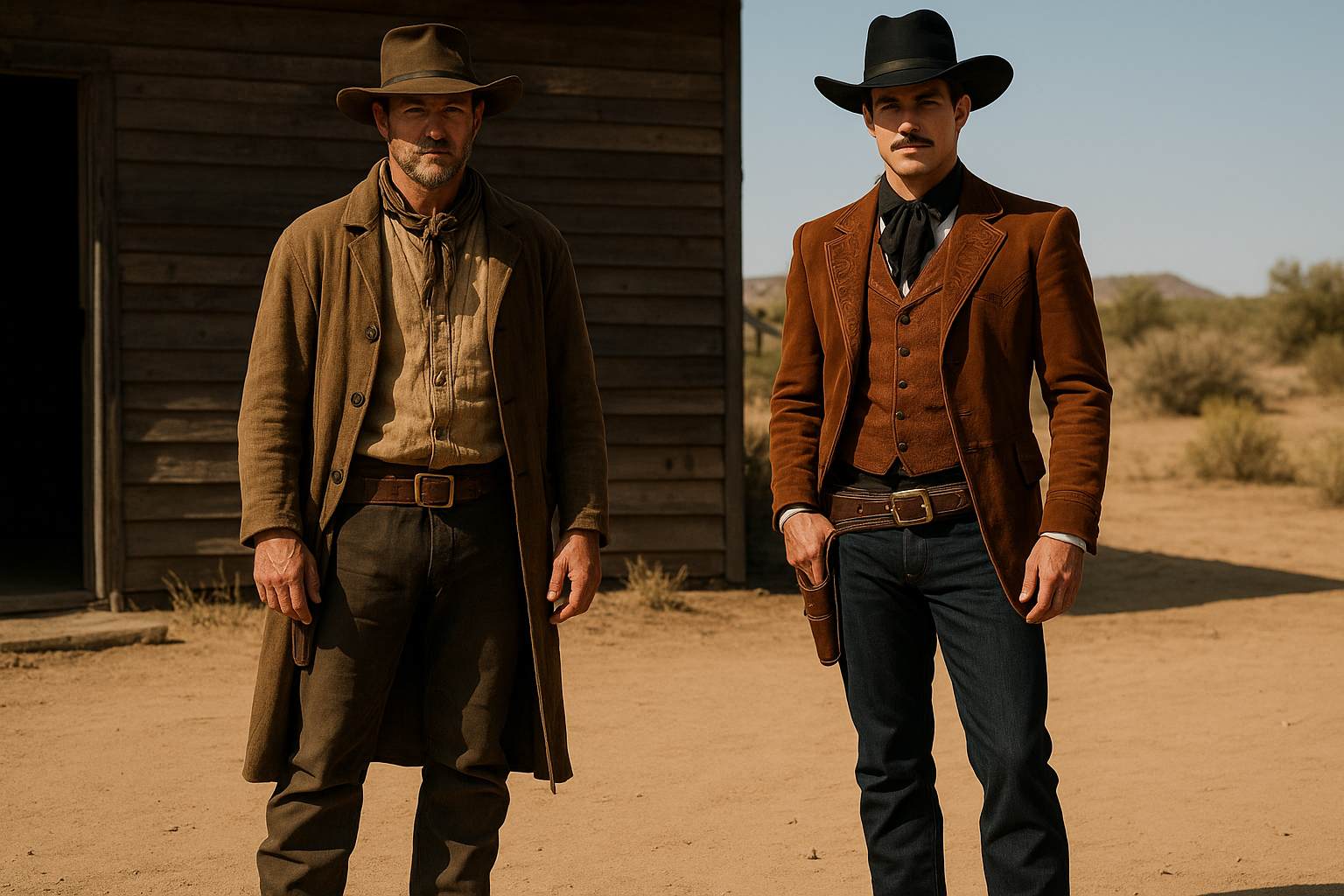
Authentic Western vs. Movie Western Costumes:
Authentic Western:
Historically accurate Western attire was practical, designed for durability and functionality in harsh, rugged environments. Cowboys, ranchers, and frontiersmen wore:
- Shirts and Trousers: Button-up cotton or flannel shirts, often loose-fitting and in muted colors. Trousers were made of sturdy fabrics like denim or canvas.
- Vests and Coats: Layering was essential for changing weather. Wool or leather vests added warmth and utility, often featuring pockets. Duster coats were worn to protect clothing from dust and rain.
- Hats: The wide-brimmed hat—typically a felt Stetson—was essential for sun and rain protection.
- Footwear: Practical boots with minimal decoration, designed for riding and rough terrain.
- Accessories: Simple leather belts with utilitarian holsters, neckerchiefs for dust protection, and spurs for horseback riding.
Movie Western:
Hollywood’s version of the Western hero took creative liberties, adding flair and drama to the look to create a more memorable and romanticized image. In movie Westerns, costumes often featured:
- Exaggerated Details: Embellished shirts with fringe, embroidery, or bright colors that would have been impractical or rare in real frontier life.
- Cleanliness and Uniformity: Characters were often dressed in neatly pressed, coordinated outfits, far removed from the gritty, work-worn clothing of the real West.
- Stylized Hats and Boots: Hats were taller, broader, and more dramatic in shape. Boots were often polished and decorative, with pointed toes and fancy stitching.
- Iconic Heroes and Villains: Costumes were also designed to visually distinguish heroes from outlaws—white hats and clean lines for protagonists, darker tones and rugged textures for villains.
Western Costuming Today:
As a costume category, the Western genre offers a wide range of options. Some choose to recreate historically accurate looks for reenactments or period pieces, while others embrace the cinematic flair popularized by classic Western films and modern interpretations like Westworld or The Mandalorian (which borrows heavily from Western aesthetics).
A Western costume might include jeans, a flannel shirt or embroidered snap-button shirt, cowboy boots, a leather belt with a holster, and a wide-brimmed hat. Adding a poncho, duster coat, or a neckerchief can instantly evoke the atmosphere of the American frontier. Whether you go for dusty realism or silver-screen drama, the Western genre remains a powerful and flexible costume theme rooted in one of America’s most enduring cultural myths.